

Introduction
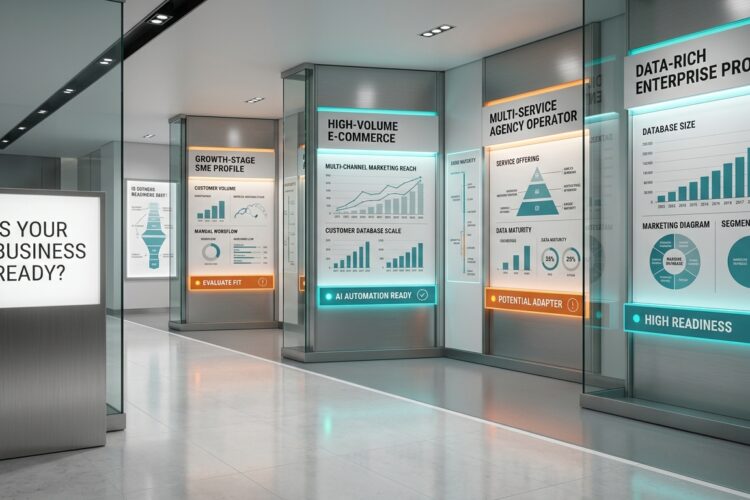
AI is rapidly entering marketing, but many businesses still misunderstand AI Automation Marketing as simply using AI to generate content or automate a few simple tasks. In reality, it is a comprehensive system that connects data, processes, and customer touchpoints to optimize the entire marketing operation. This article provides a clearer perspective so businesses can apply AI effectively, not in a fragmented way but as a scalable system.
What Is AI Automation Marketing
AI Automation Marketing combines artificial intelligence for analysis, prediction, and content generation with automation systems that execute workflows without manual intervention. The goal is not only to save time but also to improve performance, optimize customer experience, and increase conversion rates.
Common Misunderstanding: AI Equals Content Generation
Many businesses currently use AI mainly for writing blog posts, creating social media content, and generating ad copy. While these are useful, they are still very limited.
- Content is created but not connected to customer data
- No automation in distribution or optimization
- No feedback loop to improve performance
As a result, AI is used but the actual business impact remains low.
The Right Approach: AI Marketing as a System
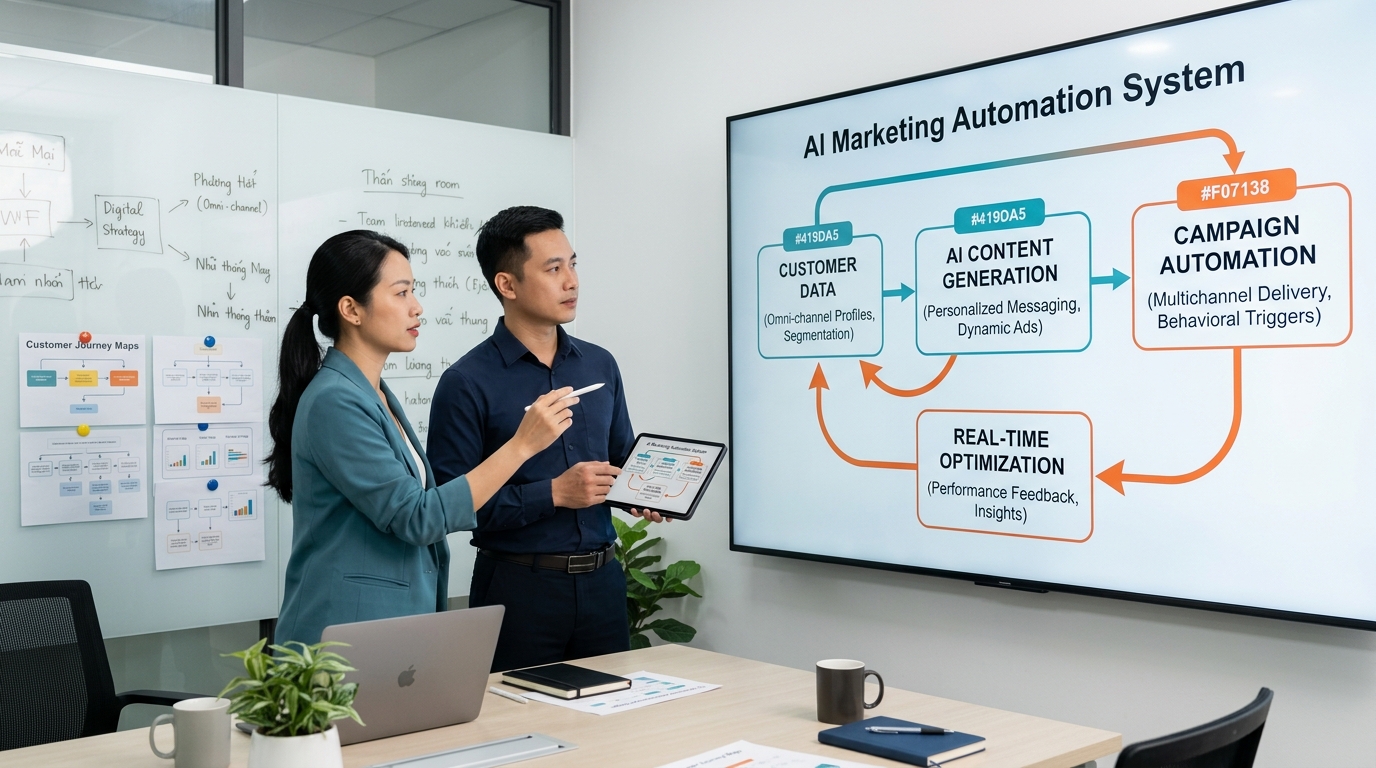
Data Collection and Customer Understanding
AI helps collect and analyze customer behavior, preferences, and interaction history.
- Better segmentation
- More personalized communication
Content and Campaign Automation
AI can generate content based on customer segments, automatically deploy campaigns across channels, and adjust messaging based on performance.
- Faster execution
- Consistent messaging
- Reduced manual workload
Optimization and Continuous Learning
AI continuously analyzes campaign performance, conversion rates, and customer responses.
- Real-time optimization
- Better ROI
- Continuous improvement
Key Components of an AI Marketing System
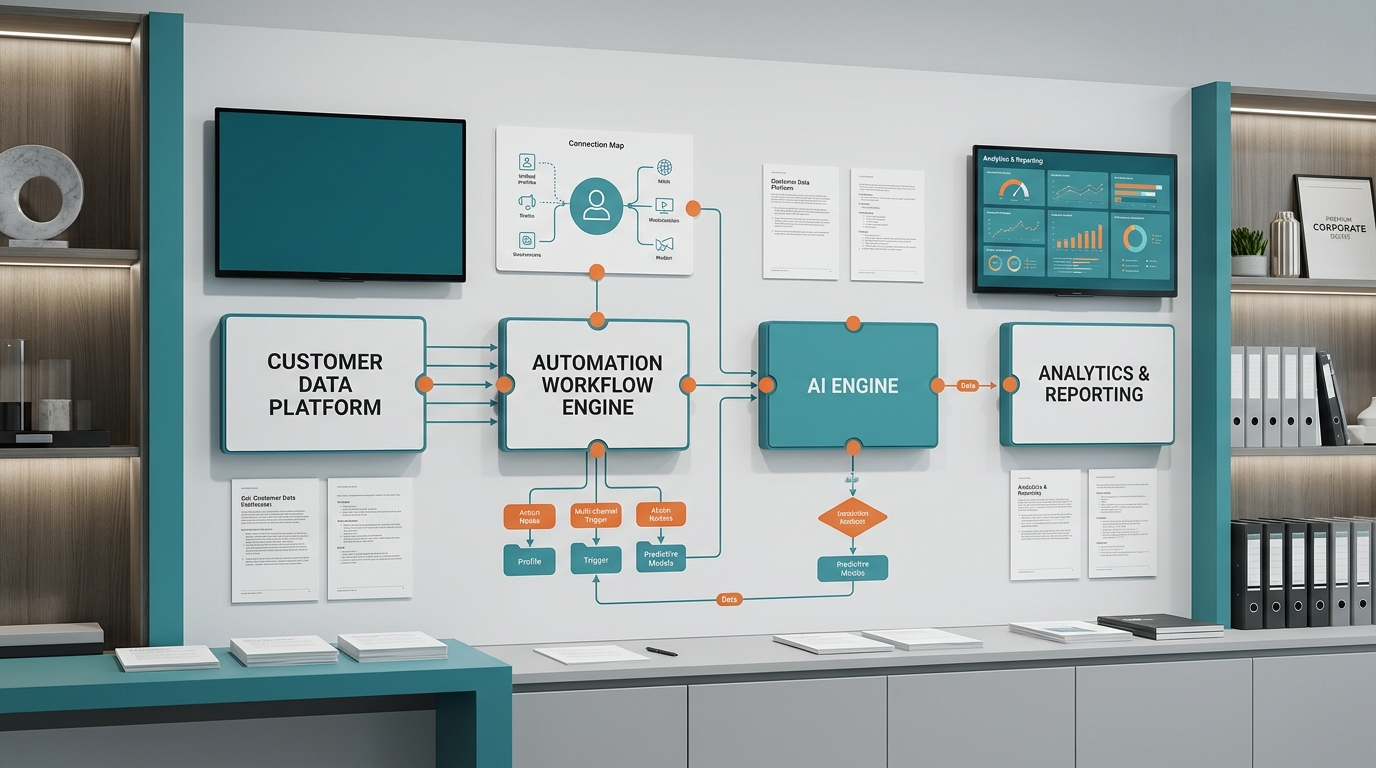
Customer Data Platform (CDP)
- Centralizes customer data
- Creates a unified customer view
Automation Workflow Engine
- Executes predefined marketing flows
- Triggers actions based on behavior
AI Engine
- Predicts customer behavior
- Generates content
- Recommends next actions
Analytics and Reporting
- Tracks performance metrics
- Provides insights for decision-making
Marketing Metrics That Matter
Businesses should focus on key metrics such as conversion rate, customer acquisition cost, customer lifetime value, engagement rate, and ROI. AI helps not only track these metrics but also optimize them automatically.
Benefits of AI Automation Marketing
When implemented correctly, businesses can achieve:
- Higher efficiency with fewer resources
- Personalized customer experiences at scale
- Faster data-driven decision-making
- Stronger competitive advantage
Challenges Businesses May Face
There are still common challenges when applying AI.
- Lack of clear strategy
- Data is not centralized or clean
- Using too many disconnected tools
- Over-reliance on content generation
Suggested Implementation Approach
To avoid fragmentation, businesses should follow a structured roadmap.
- Assess the current state, including available data and manual processes
- Define a clear strategy with specific objectives and priority use cases
- Build the system gradually, starting small and scaling over time
Conclusion
AI Automation Marketing is not just about creating content, it is about building a smart and connected marketing system. Businesses that move from tool-based thinking to system thinking will achieve better performance, scale more effectively, and stay ahead in the AI-driven era.