


Introduction
In today’s competitive digital landscape, businesses are constantly looking for ways to optimize their advertising budget while maintaining strong performance. One of the most effective strategies to achieve this is content marketing.
Instead of relying entirely on paid advertising, content marketing helps businesses attract and engage customers organically, leading to lower costs and better long-term results.
The Relationship Between Content Marketing and Advertising Costs
Content marketing plays a critical role in reducing dependency on paid ads. When businesses consistently produce valuable and relevant content, they can generate organic traffic, build trust, and maintain customer engagement without continuously increasing ad spend.
Over time, this reduces the cost per acquisition and improves overall marketing efficiency.
How Content Marketing Helps Reduce Advertising Costs

Generating Organic Traffic
High-quality content such as blog posts, SEO articles, and videos can attract users through search engines and social media without requiring paid promotion. This reduces the need for constant advertising investment.
Improving Conversion Rates
Content helps educate customers before they make purchasing decisions. When users already understand the value of a product or service, they are more likely to convert, which lowers the overall cost per conversion.
Building Long-Term Assets
Unlike paid ads that stop generating results when the budget ends, content continues to bring value over time. A well-optimized article can generate traffic and leads for months or even years.
Comparing Content Marketing and Paid Advertising
Paid advertising delivers quick results but requires continuous spending. Once the budget stops, the traffic disappears.
Content marketing, on the other hand, requires time and consistency but creates sustainable growth. It builds a foundation that reduces reliance on paid channels in the long run.
How to Balance Content Marketing and Advertising
Businesses should not completely eliminate paid advertising but instead combine both strategies effectively.
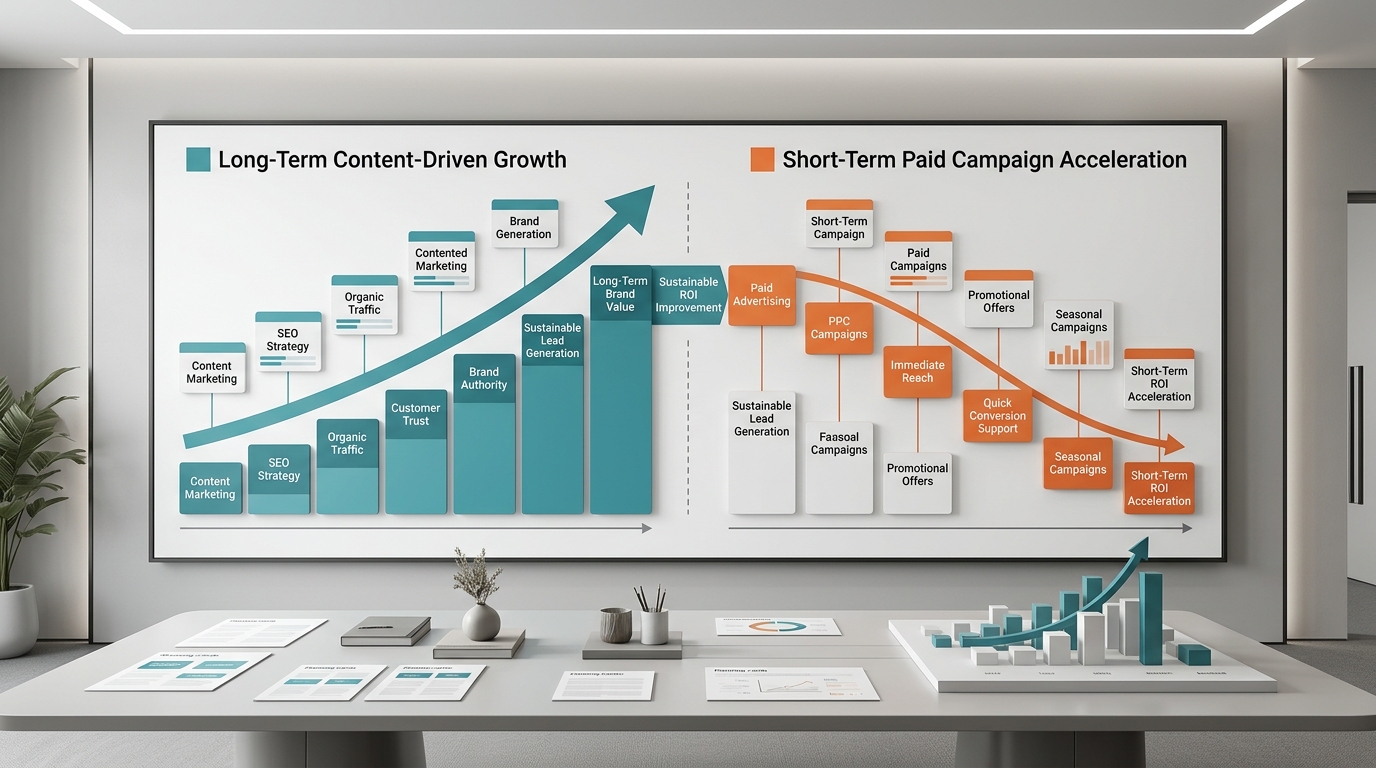
- Use paid ads for short-term campaigns and quick results
- Use content marketing for long-term growth and cost optimization
- Leverage data to optimize both channels
This balanced approach helps maximize ROI and ensure stable growth.
Benefits of Content Marketing for Cost Optimization
By investing in content marketing, businesses can:
- Reduce dependency on paid advertising
- Lower customer acquisition costs
- Improve marketing efficiency
- Build sustainable traffic and brand awareness
- Increase long-term return on investment
Conclusion
Content marketing is not just a supporting strategy — it is a powerful tool for reducing advertising costs and driving long-term growth.
Businesses that invest in high-quality content can achieve better performance, optimize budgets, and build a sustainable marketing system that delivers value over time.